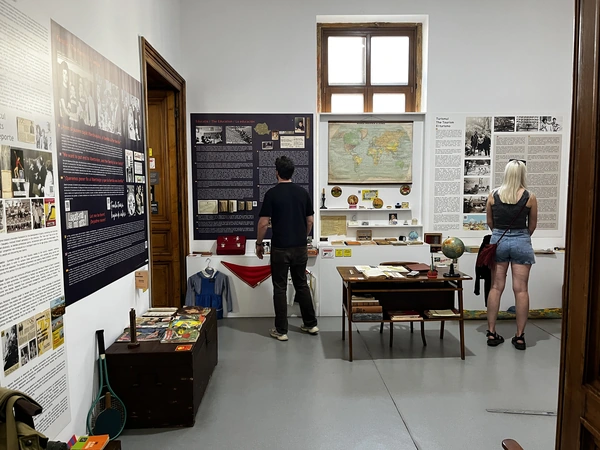
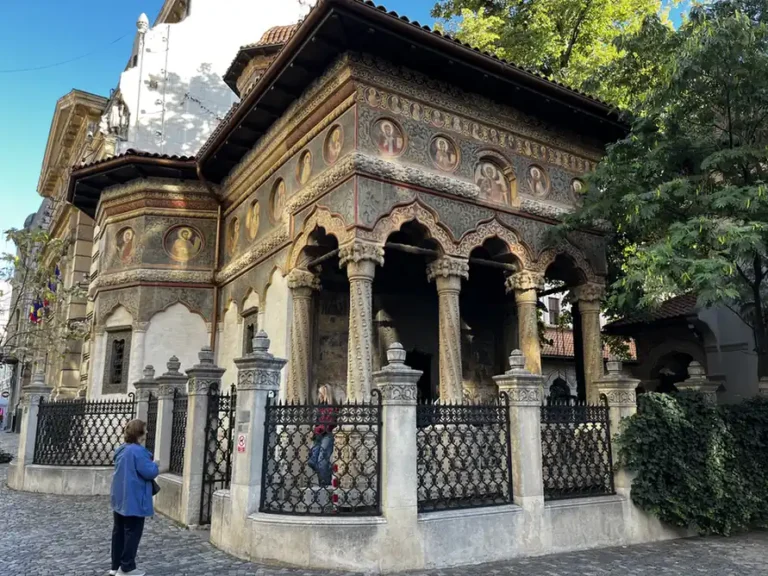
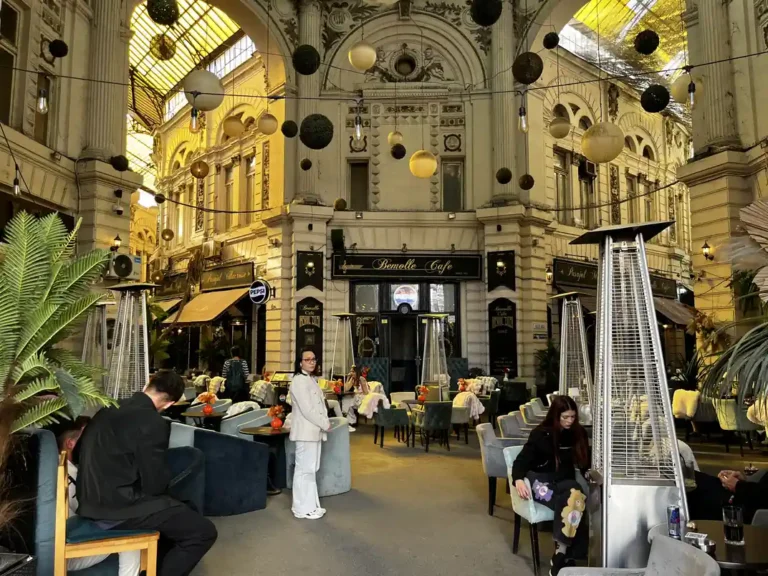
The Museum of Communism in Bucharest, also called Muzeul Comunismului or Undeva în Comunism, is a small museum in the Old Town. Its historical panels sit beside familiar household objects: a school desk, radios, magazines, vintage clothes and a kitchen with a blue cabinet.
I visited on 11 October 2026, paid 40 lei for an adult ticket and photographed the displays. There is plenty to examine in a compact space, especially if you read the explanations. This guide covers the exhibits, current tickets, guided experiences, the café and how to find the entrance.
Museum of Communism Bucharest at a Glance
Visitor quick guide · Undeva în Comunism
Hours, tickets and ratings checked 12 October 2026. Scores and review counts change. Official museum website · Official tickets
| Visitor category | Admission |
|---|---|
| Adult | 40 lei |
| University student under 26 | 25 lei |
| Pensioner over 65 | 25 lei |
| School or high-school pupil, ages 7–18 | 10 lei |
| Child under 7 | Free |
The ticket platform also lists free entry for a disabled visitor and a companion, and for accredited tour guides. Check the official ticket categories for eligibility. The exhibition is reached by stairs, and the museum says the space is not adapted for visitors with physical disabilities.
What to See Inside the Museum of Communism
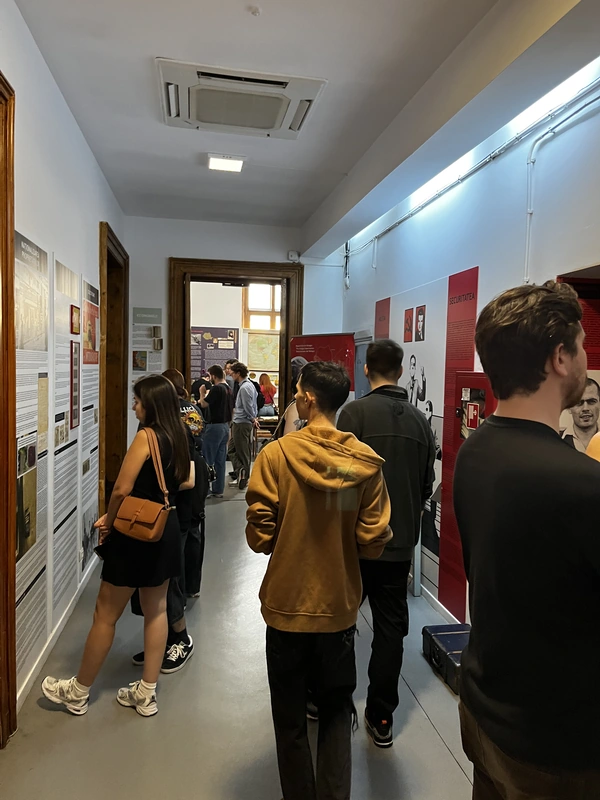
The displays connect political history with everyday life. Read the panels beside the objects: a magazine, telephone or kitchen cupboard makes more sense once you understand the conditions in which people used it. The rooms and corridors are compact, so allow space for other visitors to pass.
Historical Panels and the 1989 Revolution
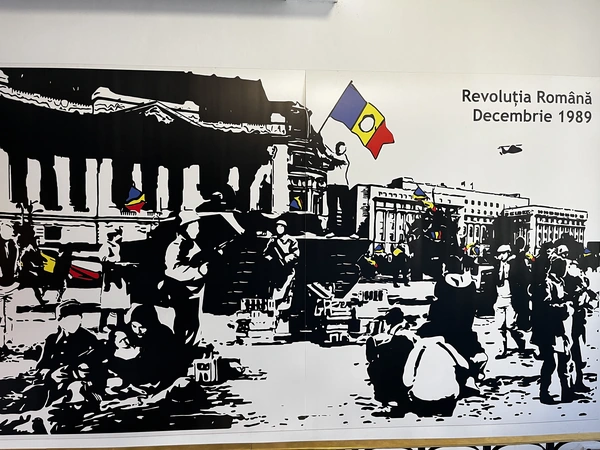
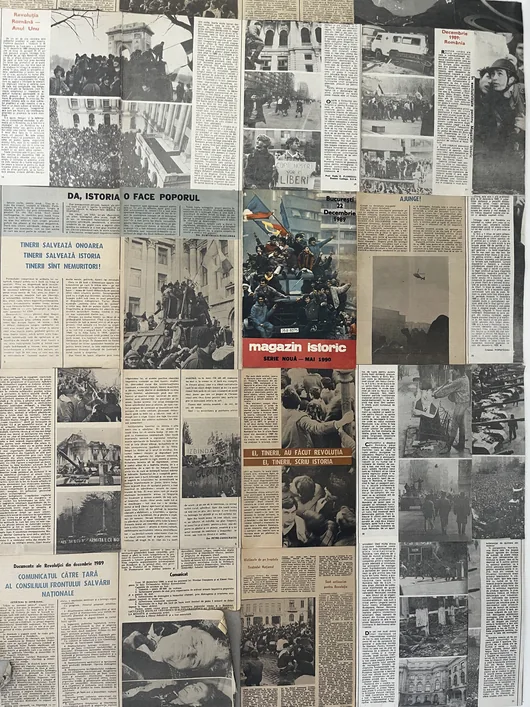
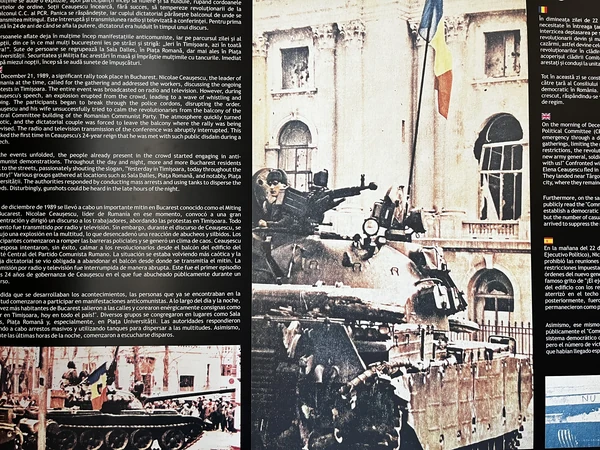
The historical displays use photographs, newspapers and multilingual text to introduce the communist period and the events of December 1989. Look at the crowd photographs and Revolution illustration alongside the written explanations, rather than moving straight to the household displays.
One recognisable symbol is the Romanian flag with a hole in its yellow stripe. During the Revolution, protesters cut out the communist coat of arms. The museum’s panel explains this gesture; TVR’s archive on Google Arts & Culture documents the same symbolism.
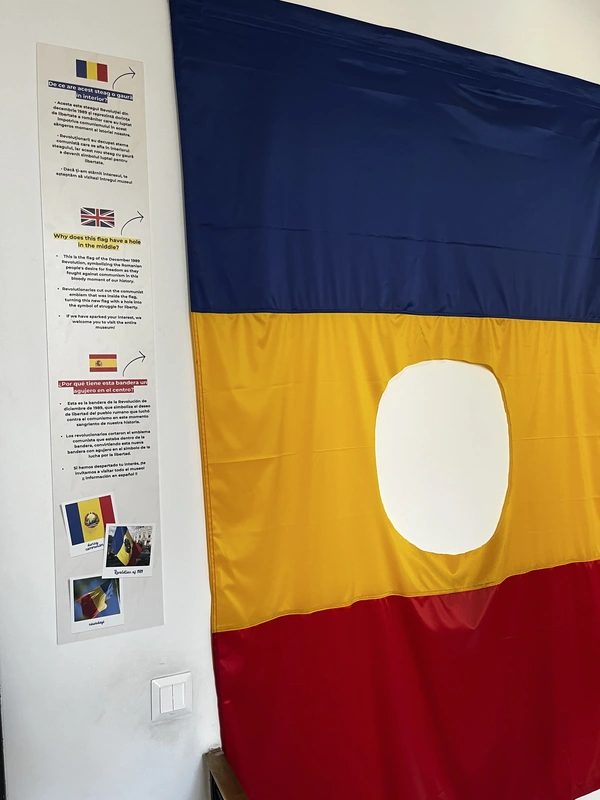
The panels I photographed have text in English, Romanian and Spanish. That makes a self-guided visit practical for many overseas visitors. There is also a guide available if a photograph, document or historical reference needs more explanation.
Propaganda and the Securitate
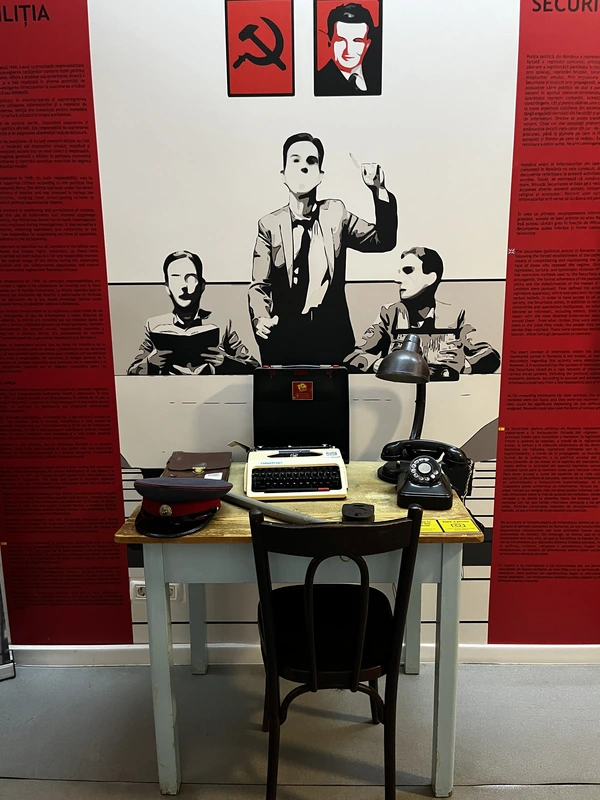
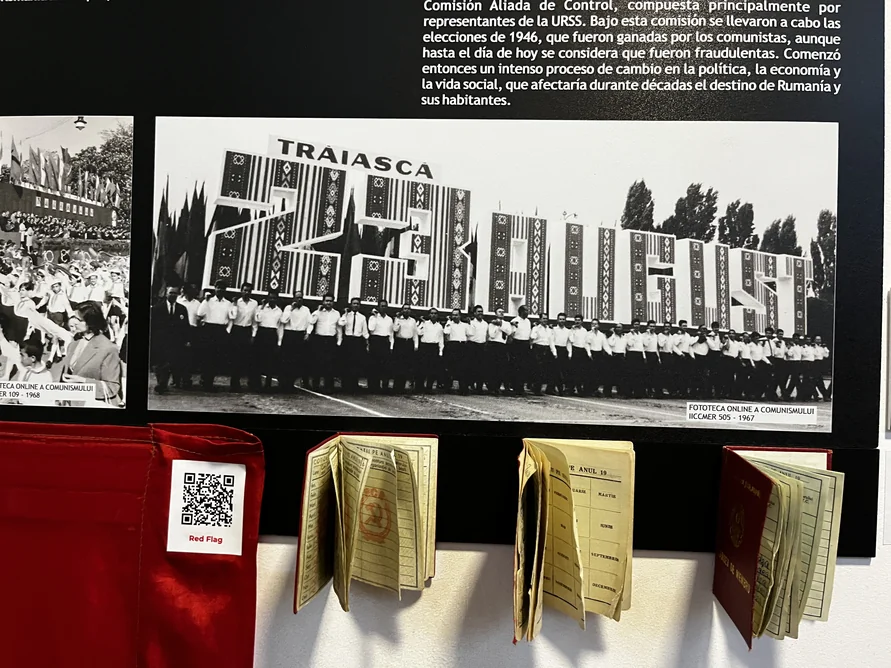
Photographs of organised crowds and open party booklets show how political messages entered public life. The surrounding panels introduce the institutions behind that imagery, including the Securitate, Romania’s communist secret police, and the Miliția, the police force of the period.
The desk display has a mechanical typewriter, a black rotary telephone, a lamp, documents and a peaked cap. It is one of the clearest places to stop and compare an object with its explanation. The typewriter and phone sit beneath panels about policing and political repression.
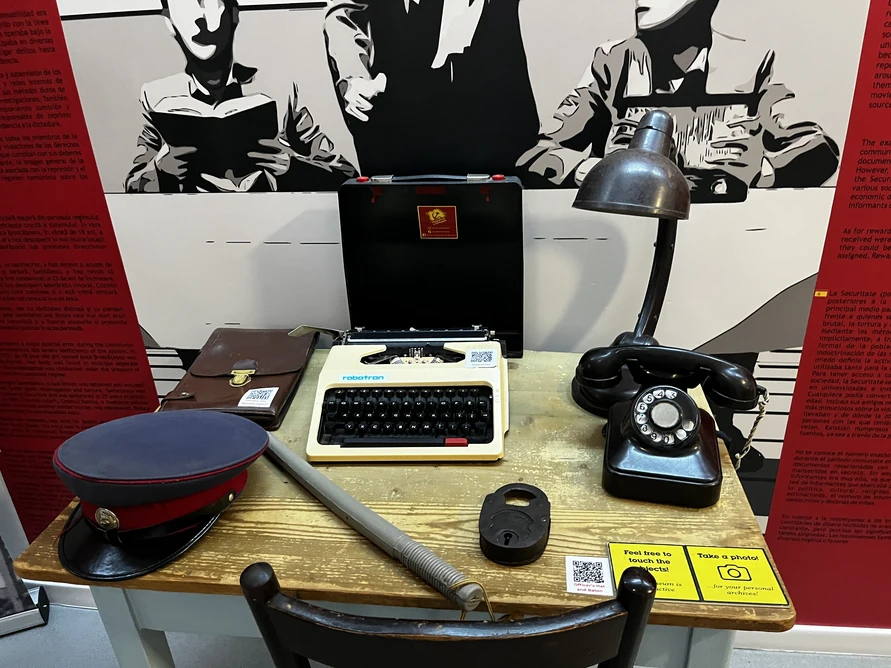
Yellow labels beside this display invite visitors to handle objects and take a photograph. Follow the instructions for each exhibit: permission here does not apply automatically to every device elsewhere in the museum.
School, Work and Everyday Objects
The wooden school desk has a globe, an abacus, notebooks, books and a calculator. Nearby labels invite visitors to look inside drawers. These small objects give the display something you can examine closely, alongside the photographs and information on the walls.
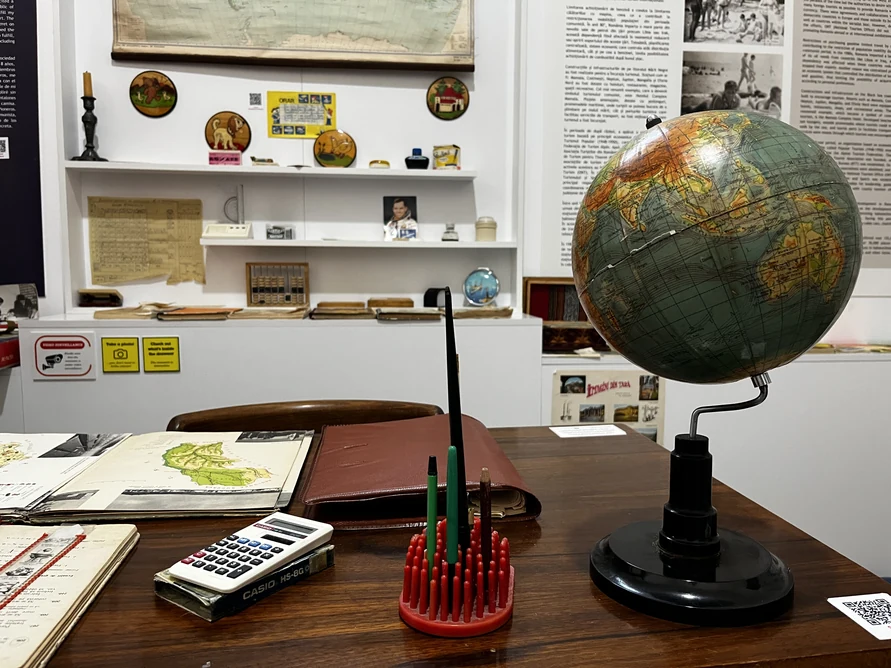
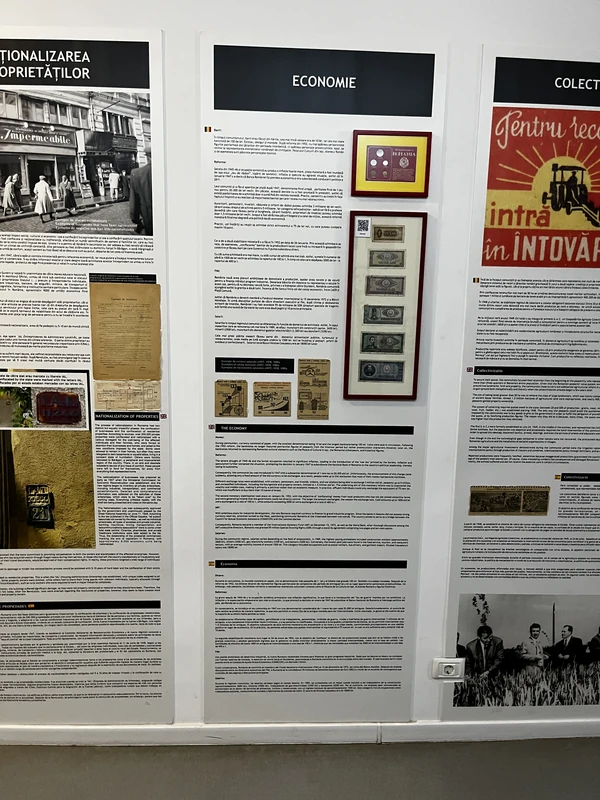
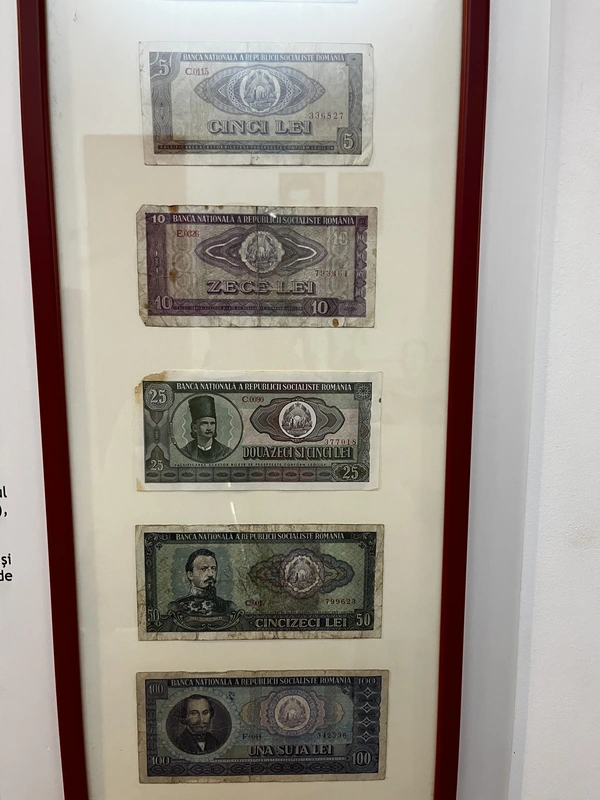
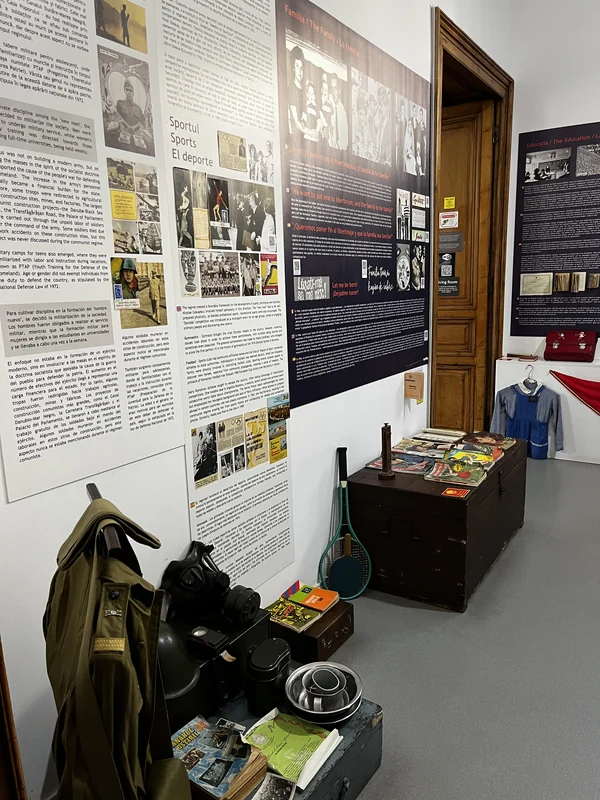
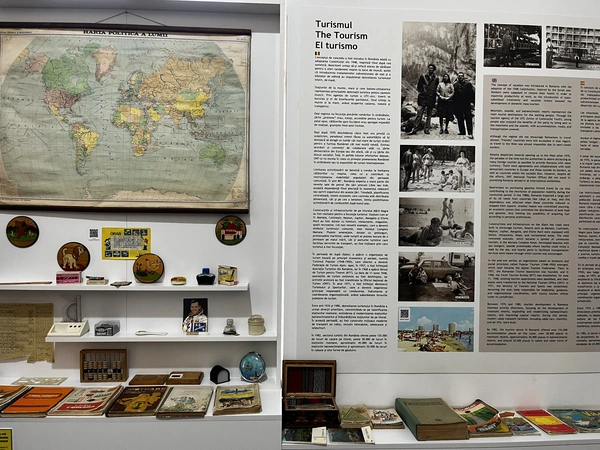
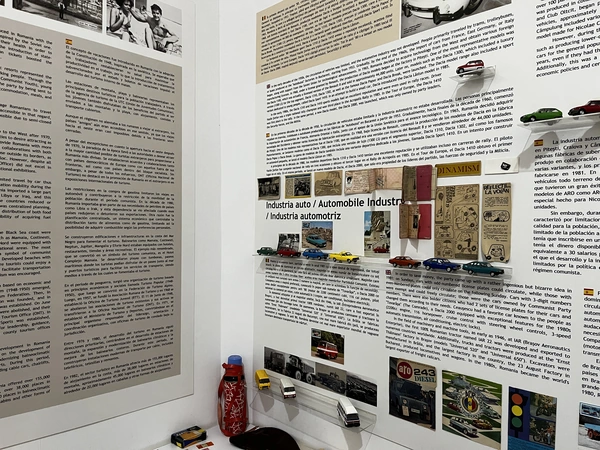
There are panels about nationalization, the economy and collectivization, as well as a frame of Romanian banknotes. Other displays cover sport, tourism and the automobile industry, with a wall map, luggage and model cars. The gallery below includes closer views of several of these exhibits.
Family Life and Vintage Clothes
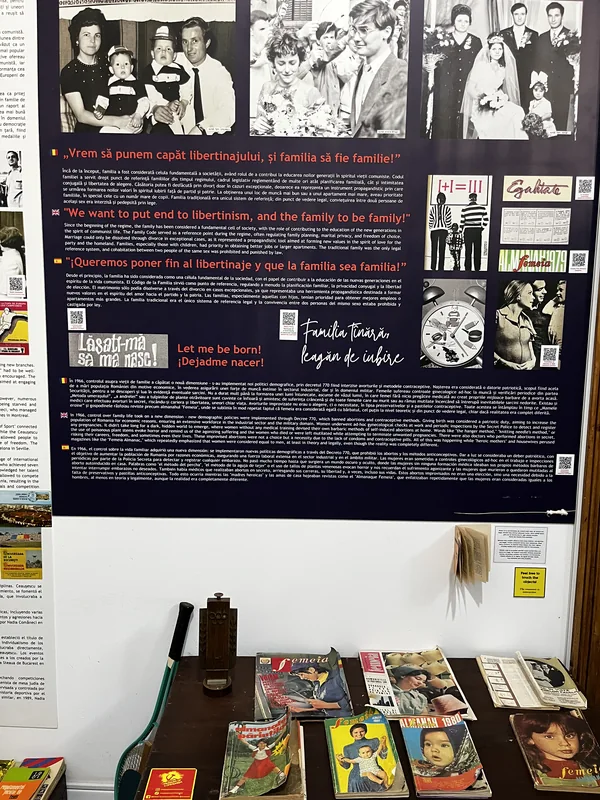
The family-life display puts wedding and family photographs above magazines such as Femeia. Read the panel before treating these as ordinary vintage souvenirs: it discusses the regime’s expectations of marriage, parenthood and women’s lives.
One part addresses Decree 770 of 1966, which severely restricted abortion. The Institute for the Investigation of Communist Crimes explains the coercive rules behind this policy. Here, the display connects that state intervention with family photographs and everyday publications.
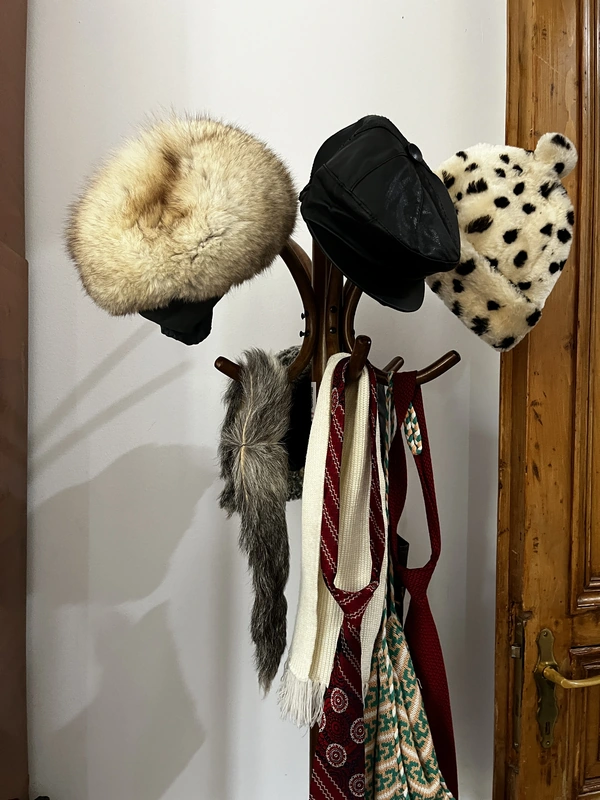
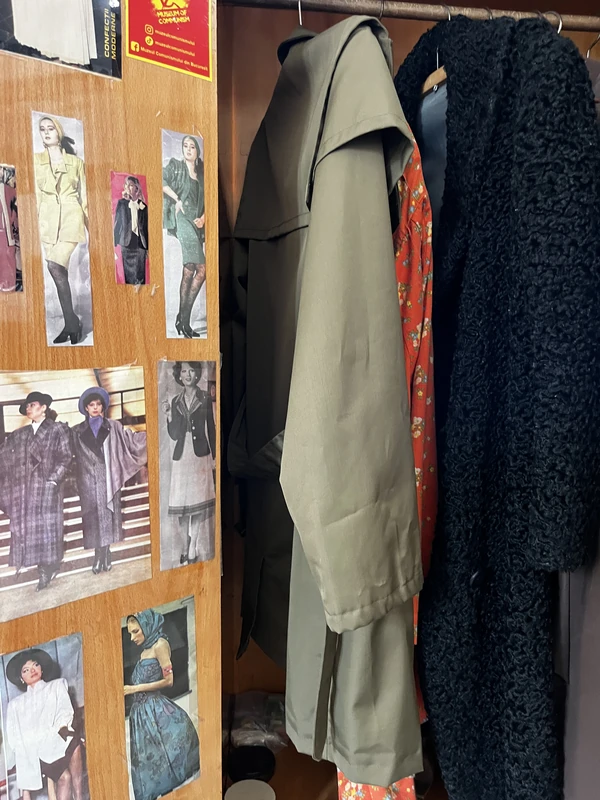
Elsewhere, hats, scarves and dresses hang on a coat stand, and coats appear beside photographs of period fashions. The museum allows visitors to try vintage clothes in designated displays. Check the labels or ask the guide before taking something from a stand.
The Kitchen and Food Shortages
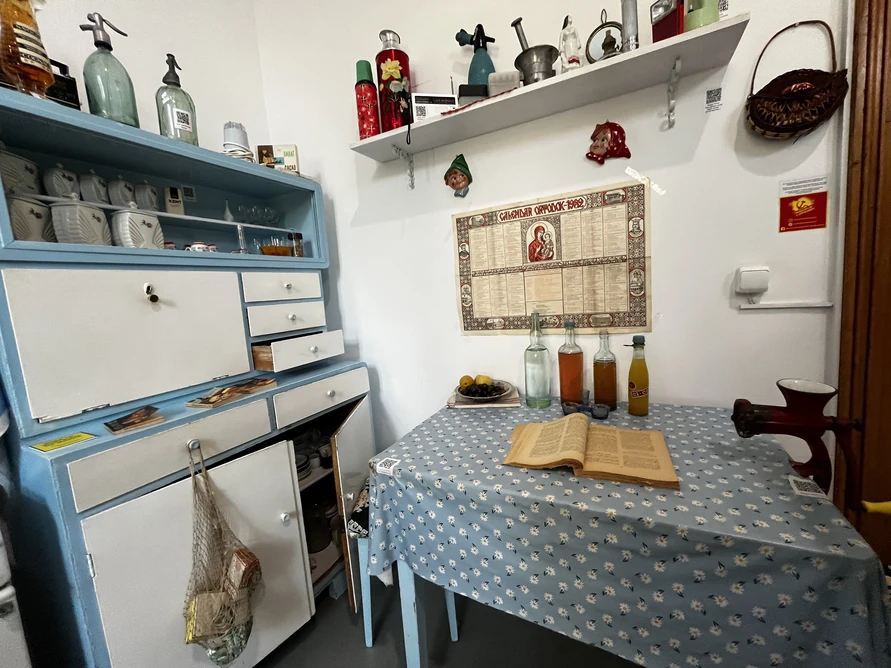
The kitchen is one of the most detailed domestic displays. A blue cabinet holds enamel dishes, with a shopping bag hanging from its door. Around the table are siphon bottles, glass bottles, a hand-operated meat grinder and an open book on a patterned tablecloth.
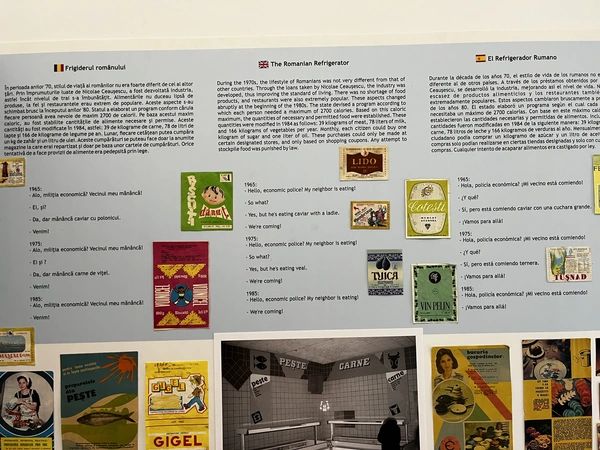
The neighbouring grocery-shop illustration has empty shelves, with baskets, bottles and vintage packaging arranged below it. The Romanian Refrigerator panel compares everyday food supplies across different decades and introduces the shortages and rationing associated with the later communist period.
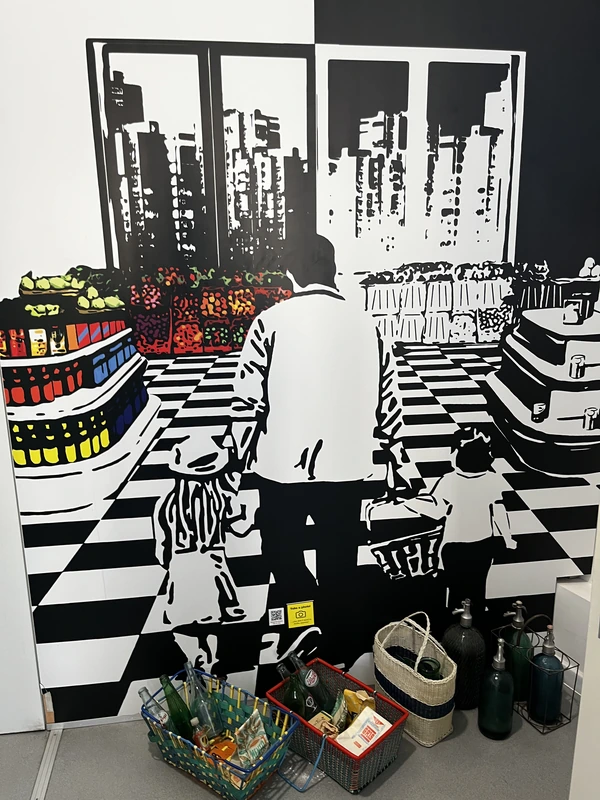
These displays help explain why food and household goods recur throughout the museum. Look at the packaging and the text together: familiar brands and utensils sit beside accounts of the difficulty of obtaining basic supplies.
Music and Old Electronics
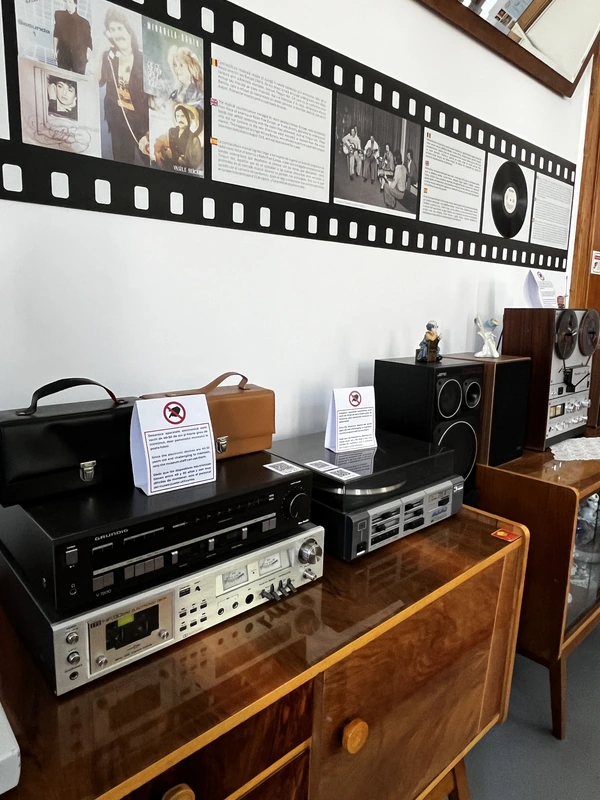
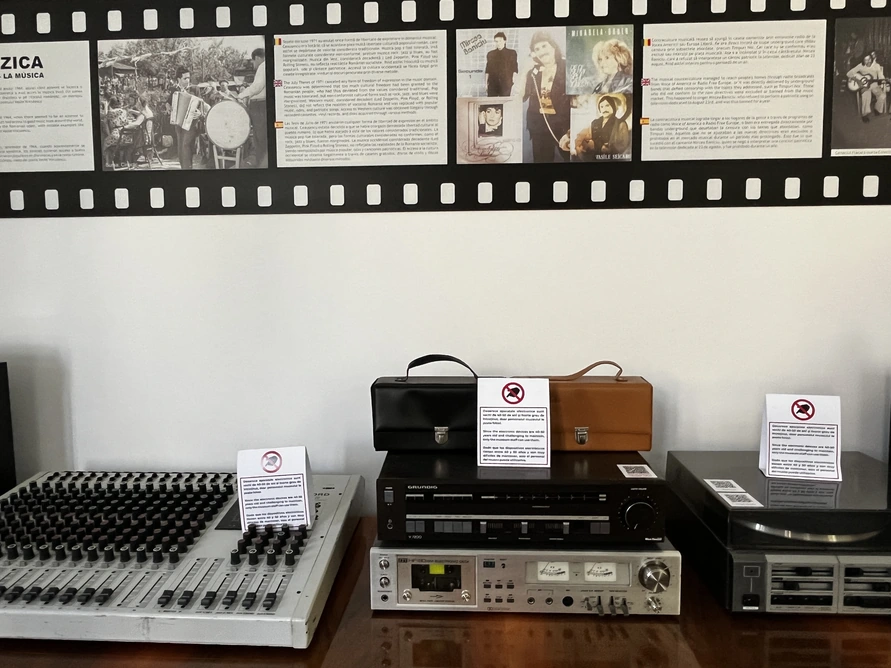
Radios, record players, cassette equipment and cameras fill another part of the exhibition. A wooden record player sits below information panels, and more audio equipment appears on cabinets beneath displays about music and cinema.
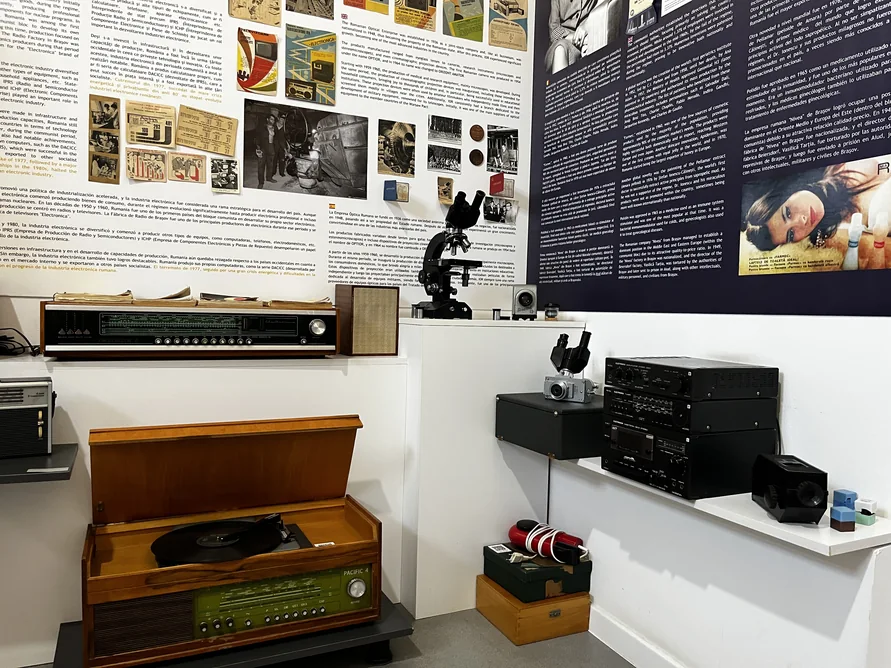
I noticed an important difference between these devices and the school desk: some audio equipment has “Do not touch” notices. The labels explain that the older devices need careful handling and may be operated only by museum staff.
Guided Tours and After-Hours Visits
An on-duty guide can answer questions in Romanian or English as part of your admission. For a full guided tour of about 40 minutes, reserve by email at [email protected]. The official tours page lists these additional group fees:
| Group size | Tour fee, added to individual tickets |
|---|---|
| Up to 10 visitors | 60 lei / group |
| Up to 20 visitors | 120 lei / group |
| Up to 30 visitors | 180 lei / group |
For two adults, ordinary admission plus the reserved tour comes to 140 lei in total: two 40-lei tickets and one 60-lei group fee.
The museum also offers Stories & Flavors of Communism, combining a city walk, the exhibition and a tasting that includes nechezol. This is a separate booked experience.
Another option is dinner inside the museum, with a guided visit and a themed meal. The operator publishes 47 euro, a duration of about 2½ hours and an 18:30 start. Check the booking calendar for available dates and languages.
The Museum Café and Nechezol
The café serves nechezol, the communist-era coffee substitute mentioned throughout the museum’s visitor information. You can stop for a drink without buying museum admission, or order something to enjoy on the terrace or during your visit.
The official café menu also lists specialty coffee, tea, hot chocolate and lemonade. These are examples of its published prices in Romanian lei (RON), checked on 12 October 2026:
| Drink | Price |
|---|---|
| Espresso | 9 lei |
| Cappuccino | 15 lei |
| Flat white | 17 lei |
| Latte | 17 lei |
| Espresso tonic | 19 lei |
| Lemonade with mint | 15 lei |
The website also mentions craft beer and a Communist Cherry Cocktail, but does not publish prices for those drinks or nechezol in the menu above. Ask at the bar. Drinks are paid separately from standard museum admission.
The Story Behind Undeva în Comunism
This private museum opened in July 2023. Co-founders Gabriel Boga and Cătălina worked with a team that included history graduates and historical tour guides. A Radio Free Europe interview with Boga describes how objects were gathered from around Romania to build the collection.
Its approach brings the regime’s political institutions into the same visit as its domestic objects. The kitchen, magazines and music equipment become easier to understand beside panels on food shortages, repression and family policy. Give those explanations as much attention as the objects themselves.
How to Get to the Museum of Communism
Walking and Metro
The museum is in Bucharest’s Old Town, at Strada Covaci 6, with the entrance on Strada Soarelui. Look for the red door beneath the Museum & Coffee sign. The exhibition is upstairs.
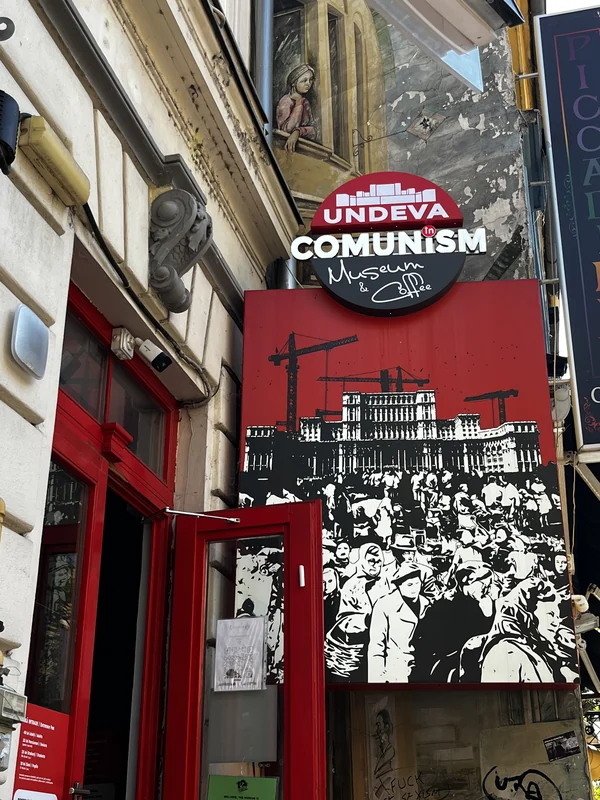
Piața Unirii, served by metro lines M1, M2 and M3, and Universitate, on M2, are useful nearby stations. Allow roughly 5–10 minutes on foot from the Unirii area or 10–15 minutes from Universitate, depending on your exit and route.
You can combine the visit with a walk through the same Old Town streets as Cărturești Carusel and Hanul lui Manuc. The museum is small enough to fit into that walk without setting aside a whole day.
Coming by Car
Park around the edge of the Old Town and walk to the museum. The following options are listed by amParcat. The numbers are total listed spaces, checked on 12 October 2026, rather than live availability.
| Parking | Total Spots | Directions |
|---|---|---|
| Doamnei 1 Parking Strada Doamnei | 23 | Get directions |
| Bărăției Parking Strada Bărăției | 33 | Get directions |
| Patriei Parking Strada Patriei | 30 | Get directions |
| Magazin Unirea Parking Piața Unirii / Unirea Shopping Center | 700 | Get directions |
Bărăției and Patriei are on the southeastern approach; Doamnei is farther north, and Unirea offers a larger alternative beside the square. The map marks the approximate parking areas. Follow the posted access and payment rules at the space you choose.
→ View the Museum of Communism parking map
Frequently Asked Questions
It is a useful stop if you want to understand everyday life under Romania’s communist regime. Expect a compact exhibition with historical panels, household objects and some interactive displays. Reading the explanations adds more to the visit than simply photographing the objects.
I would allow 60–90 minutes to read the panels and examine the displays, with extra time for the café. This is a planning suggestion. The separately reserved full guided tour lasts approximately 40 minutes.
Yes. The panels I photographed have English, Romanian and Spanish text. An on-duty guide can also answer questions in Romanian or English.
Photography is permitted in the displays, and several labels invite visitors to take a picture. Many objects can be handled, including designated clothes and drawers. Some older audio devices may be operated only by staff. Follow each exhibit’s labels and ask the guide if unsure.
No reservation is required for an ordinary visit. Contact the museum for large groups, a complete guided tour or special experiences such as the city walk and dinner. Those need separate arrangements.
Standard museum admission does not include drinks. Nechezol is available from the café; certain separately booked experiences include a tasting. Check what is included in the particular ticket or tour you select.
The exhibition is reached by stairs, and the museum says its space is not equipped for visitors with physical disabilities. It is not suitable for wheelchair access. Contact the museum directly about other access needs before visiting.
Museum of Communism Photo Gallery
More photographs from my visit on 11 October 2026, including historical panels, banknotes, clothing, food packaging and the everyday objects around the exhibition.