Viorica Petrovan told me it takes six months to finish one traditional Romanian shirt. I thought I’d misheard. But watching her in her workshop in Gura Humorului, adding beads one by one, I understood. This isn’t just sewing. It’s patience turned into art.
Viorica started learning beaded embroidery when she was 10 years old with her first traditional belt for a folk costume. Now, decades later, she calls this work her escape, her peace.
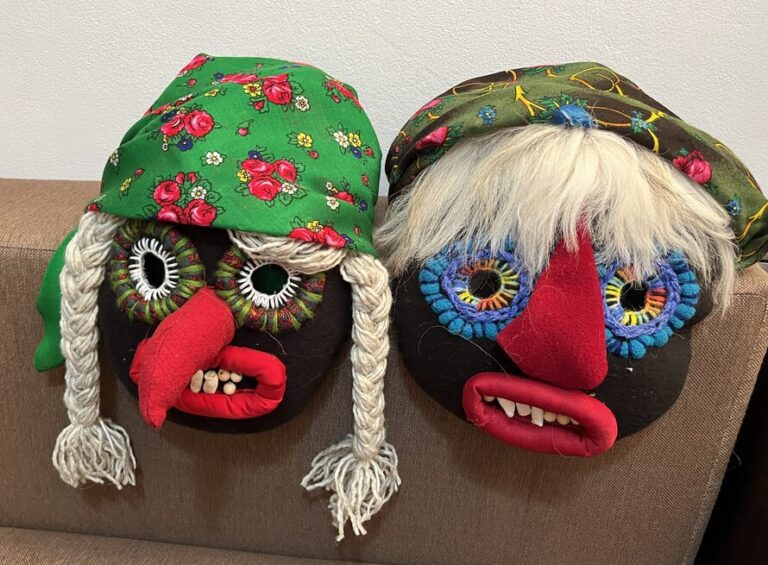
Just 10 minutes walk from Ana Cazac’s mask workshop in the same town, Viorica keeps another Romanian tradition alive through her beadwork embroidery.
If you’re curious about experiencing this craft yourself, I organize personalized visits to artisans like Ms. Viorica throughout Romania.
What Is Viorica Creating with Traditional Beadwork?
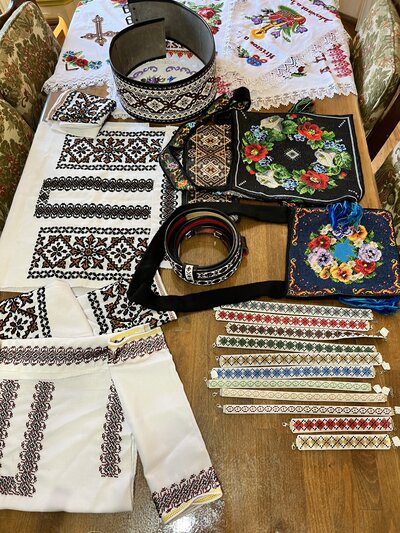
Viorica mostly creates traditional men’s belts called “chimir traditional.” Each bead gets sewn individually. A leather worker then attaches the beadwork to leather backing.
Folk singers across Romania wear these belts for performances. They last generations – some family belts are over 100 years old.
She also makes bags for weddings, bracelets for folk dancing, and decorative items. But the shirts test real patience.
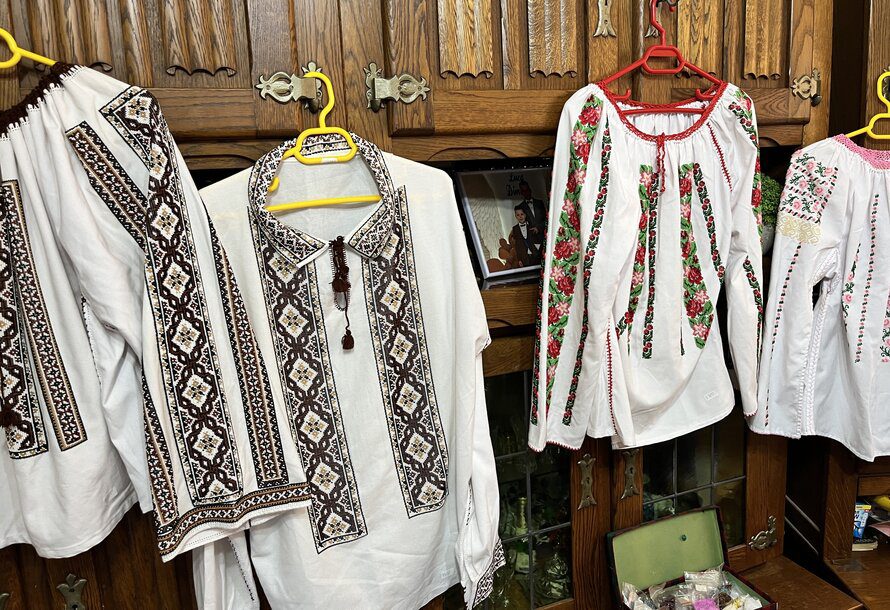
They explode with color – red, yellow, green, blue – in patterns that tell stories. Brown dominates because it’s Gura Humorului’s signature color.
Every Romanian region has distinct colors. Viorica can identify where any piece comes from just by looking.
Folk performers order shirts months ahead. Each becomes a family treasure passed down through generations.
How Romanian Beadwork Is Made
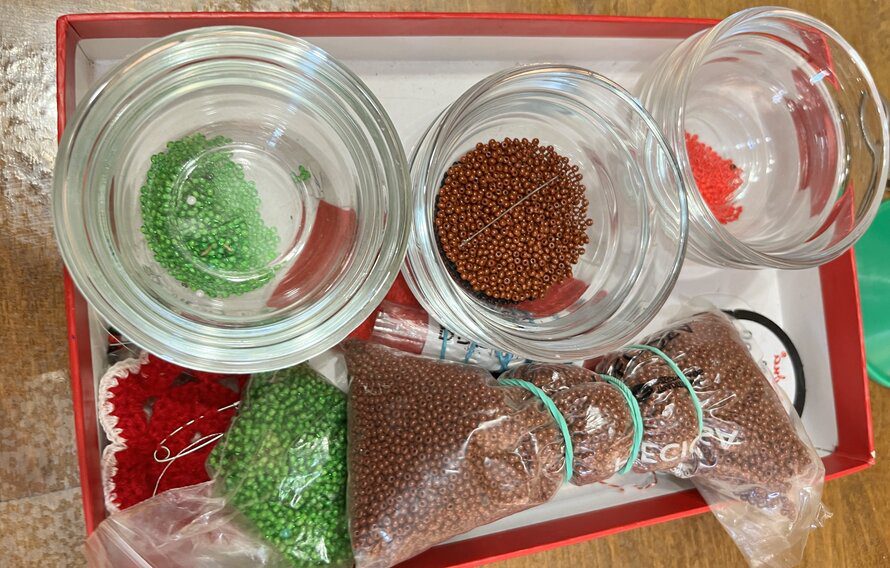
Viorica puts a bead on her needle, makes a stitch, adds another bead, makes another stitch. Every single bead attaches this way. She doesn’t know if there’s a machine for sewing beads, but until recently she was sure there wasn’t one.
For beadwork, you have to use the same material with the same density because the bead needs to fit perfectly in its little square. If the material is different, the pattern won’t work properly – you’ll get gaps in the fabric.
Many clients don’t believe these are made by hand because she uses white thread on white fabric, so it’s hard to see the difference. Other craftsmen use black thread on white fabric so you can see the stitching.
She showed me how she works on a collar for a little boy’s shirt. She puts the bead on the needle, one by one, and after each stitch, she puts another bead on the needle and continues. Now I understand why it takes six months.
The Last Supper in Beads
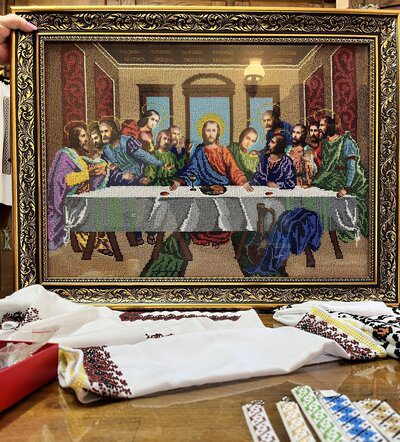
Viorica recreated Leonardo da Vinci’s “The Last Supper” entirely in beads. Only the faces stayed painted.
Everything else – robes, table, bread, cups, background – she built bead by bead over a print.
The piece measures three feet wide. She used beads so small you need good eyes just to thread them.
Different shades create shadows and depth. The robes’ folds look real.
I asked how long it took. She smiled and said, “Some things you don’t count.”
Her husband later told me it was almost two years of evening work.
Why She Keeps Making These Pieces
This isn’t about money. Six months of daily work would make a shirt cost thousands of euros. Nobody pays that. She charges enough for materials and a bit extra.
“This is my refuge,” she told me. “When I’m stressed, I sit with my beads. The world goes quiet.”
Her grandmother taught her during a difficult childhood. “Your hands stay busy, your mind stays calm,” her grandmother said. Fifty years later, it still works.
During Communist times, the government promoted folk traditions. Materials were easy to get. Now, finding quality beads means ordering from Czech Republic or Italy.
Teaching Young People This Craft
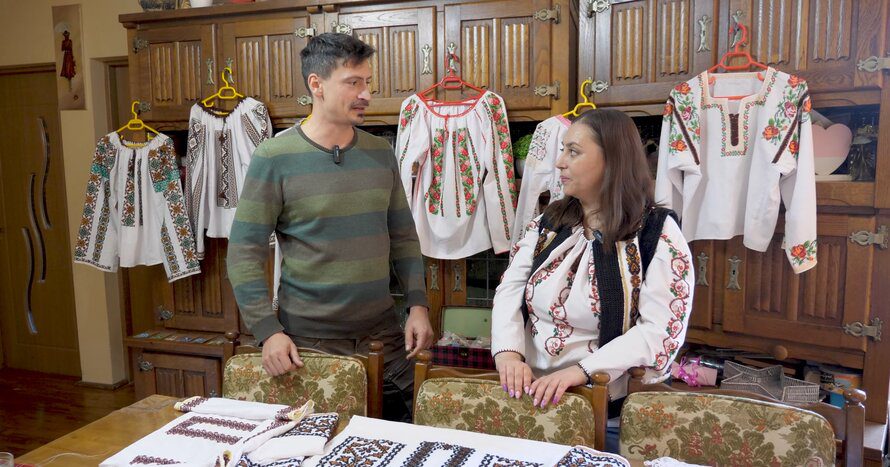
Some mothers teach daughters, but most young people lack patience. Viorica tried teaching at the cultural center. Twenty students started. After a month, three remained.
The demands are tough. You need perfect vision or strong glasses. Steady hands. No arthritis. The ability to sit for hours. These requirements eliminate many interested people.
Why Handmade Clothing Matters
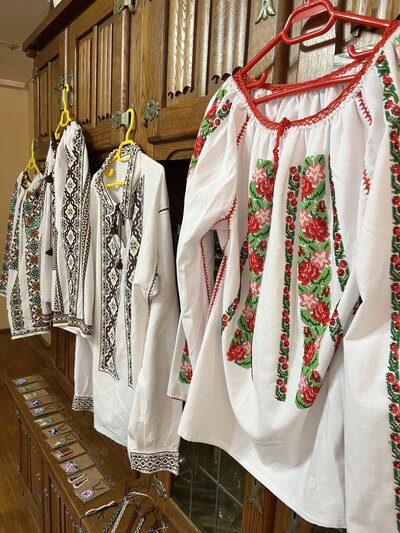
In the time Viorica makes one shirt, a factory produces millions.
But her shirt lasts 100 years. The factory shirt might not survive 100 washes.
When you wear one of these shirts, you’re wearing months of someone’s life. The belts connect folk singers to their great-grandparents.
Even small bookmarks carry weight – they represent skills once every woman knew.
At folk festivals, people touch Viorica’s work carefully, like it might break.
When she shows them the back with individual stitches, they go quiet.
Real handwork feels almost sacred in our mass-produced world. For wider context on rural life, the Dimitrie Gusti National Village Museum in Bucharest displays traditional homes and household textiles from across Romania.
How to Tell if Beadwork Is Truly Handmade
Real beadwork has tells. Beads aren’t perfectly aligned – close, but with tiny variations. Patterns show small differences. The back reveals individual stitches, not machine loops.
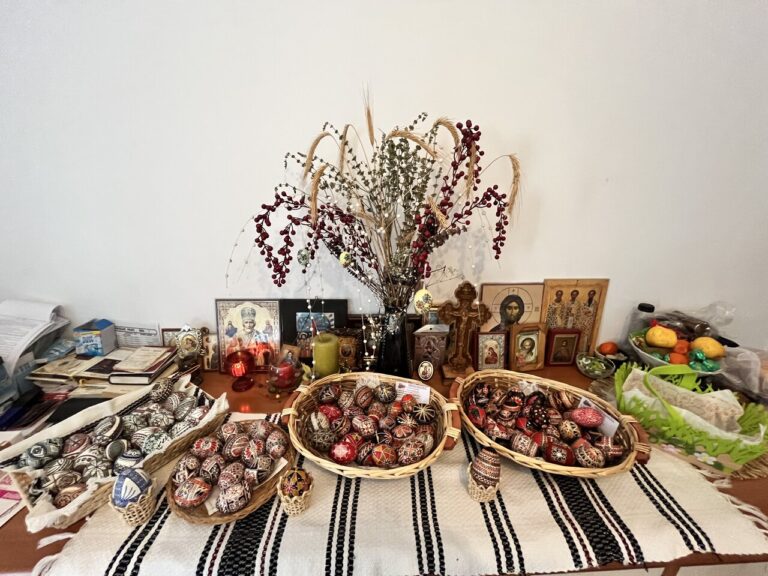
Viorica works from home, taking orders when possible. One shirt takes six months. She makes two per year, maybe three for simpler designs. Smaller items go faster, but everything requires that same bead-by-bead patience. Traditional egg decorating in Rădăuți is another example of handwork whose value becomes clearer when you see the process.
Gura Humorului has become a craft center. Viorica with her beads, Ana with her masks, plus woodcarvers and weavers all work here, keeping traditions alive.
Want to try Romanian beadwork or meet artisans like Viorica? I arrange cultural experiences throughout Romania. [Contact me] to explore traditions that teach us to slow down.